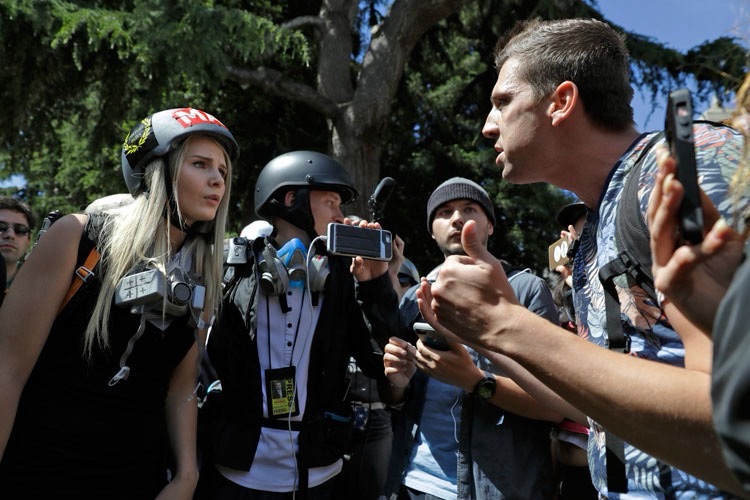
Over the past twenty years, American political discourse hasn’t just gotten nasty—it’s gotten dangerous. And I’m not talking about hurt feelings because someone called you a Nazi or political correctness run amok. I’m talking about a documented pipeline from dehumanizing rhetoric to actual violence, from conspiracy theories to mass shootings, from Twitter threads to body counts.
The data is stark, the patterns are troubling, and the excuses have run out.
The Uncomfortable Truth About “Both Sides”
Here’s where I’m going to lose some of you, because we’ve been conditioned to believe that political extremism is always symmetrical—that for every right-wing lunatic, there’s an equally deranged left-wing counterpart. That’s comfortable. It’s neat.
It’s also a steaming load of happy horseshit.
Yes, both sides engage in dehumanizing rhetoric. But there’s a fundamental difference in what they target that matters enormously for understanding threats to democratic governance.
Right-wing eliminationist rhetoric predominantly targets WHO people ARE—their race, sexuality, gender identity, ethnicity. When Tucker Carlson promoted Great Replacement Theory over 400 documented times on Fox News, he wasn’t criticizing immigrants’ political beliefs—he was painting their very existence as a threat to white America. When Donald Trump repeatedly calls immigrants like my wife’s family “animals” and claims they’re “poisoning the blood of our country”—language historians explicitly compare to Nazi rhetoric—he’s targeting their fundamental identity.
Left-wing confrontational rhetoric more often targets WHAT people BELIEVE or DO—their political positions, their roles, their actions. “Punch a Nazi” targets someone for choosing Nazi ideology. ACAB (All Cops Are Bastards) targets people for choosing to be cops. Maxine Waters’ 2018 call to “create a crowd” and “push back” on Trump cabinet members targeted their political roles and actions.
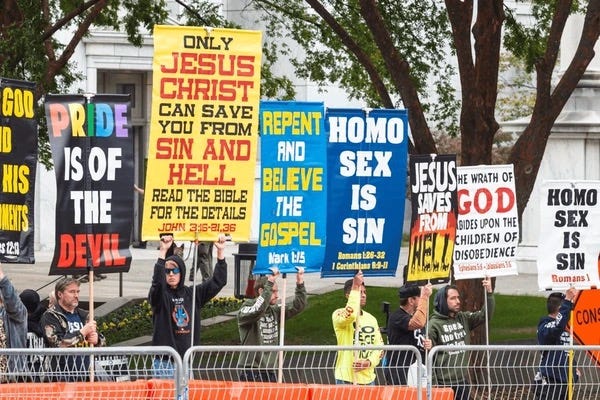
This distinction matters enormously, though the boundaries aren’t always clean. Religious identity can be both inherited and chosen. Political beliefs often feel immutable to true believers. Professional roles like police work can become central to personal identity. But the general pattern holds: you can change your ideology, leave your job, or modify your political positions. You can’t change your race, sexuality, or ethnicity.
That’s why citing Leviticus 20:13 out of scholarly context fundamentally differs from “punch a Nazi.” One targets an immutable sexual identity with biblical death penalties. The other targets a chosen ideology with street confrontation.
The Body Count Tells the Story
Here’s the uncomfortable reality: Right-wing rhetoric has directly inspired multiple mass casualty attacks targeting people for WHO they are. Buffalo supermarket (targeting Black shoppers). El Paso Walmart (targeting Hispanic shoppers). Tree of Life synagogue (targeting Jewish worshippers). The manifestos cite the same replacement theory rhetoric Tucker was peddling nightly.
And yes, Left-wing rhetoric has also inspired deadly violence, most notably the 2017 Congressional baseball shooting targeting Republican politicians for their political roles and beliefs. And there’s also the 2016 Dallas police shooting—five officers killed by a gunman inspired by systematic anti-police rhetoric. I recognize this complicates my framework since professional identity can feel as central to someone’s sense of self as other characteristics, and the attack specifically targeted officers for wearing the uniform.
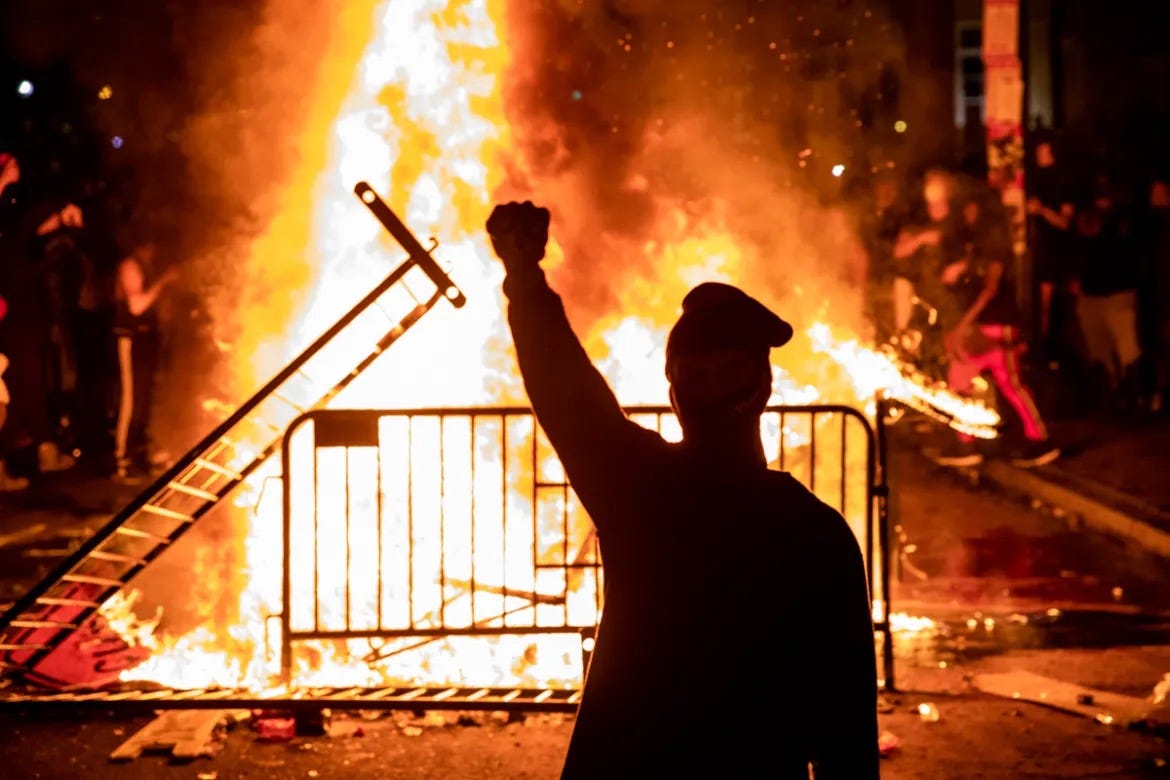
The 2020 George Floyd protests add another layer of complexity—36 deaths, over 700 injured officers, $1-2 billion in damage. Much of this was reactive civil unrest sparked by specific incidents of police violence, but some involved systematic targeting of law enforcement as a profession.
But there’s a fundamental difference that matters. Reactive violence over police actions can theoretically be addressed by changing police behavior. Eliminationist violence targeting racial or sexual identity has no policy solution except elimination of the targeted groups.
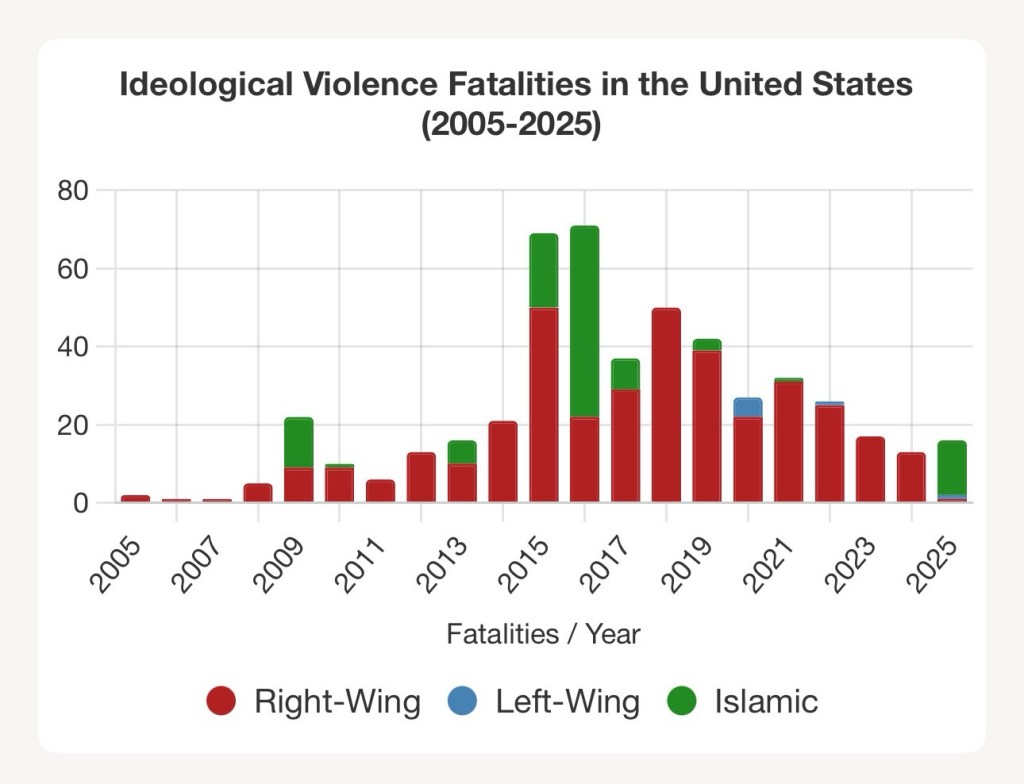
And this difference can be seen not only in the rise of hate-crimes against protected groups over the last several years, but in the stark reality that right-wing ideological killings since 2005 have outpaced left-wing by an order of magnitude.
When God Becomes a Weapon
The assassination of Charlie Kirk just three days ago was a tragic act of political violence. We’re all still reeling from his death, and I realize this may be too soon for many, but it’s important and needs to be said. In examining dehumanizing rhetoric, it’s critical to note that Kirk was an outspoken anti-LGBTQ+ figure in his speeches and debates, and quoted Leviticus 20:13 on at least one occasion, calling it “God’s perfect law” on his June 8, 2024 podcast episode.
If a man has sexual relations with a man as one does with a woman, both of them have done what is detestable. They are to be put to death; their blood will be on their own heads.
Leviticus 20:13
Without careful framing in scholarly and historical context, this verse is highly problematic. It doesn’t just condemn homosexuality, it prescribes death as the penalty. It’s not a stretch to label it hate speech. Kirk’s stated intent may have been to highlight selective scripture use—pointing out that Ms. Rachel quoted Leviticus 19 about loving neighbors while ignoring other passages in the same book. However, he didn’t simply cite the verse as a rhetorical counterpoint; he explicitly called it “God’s perfect law” with no caveats, qualifications, or distancing language. This framing goes beyond pointing out scriptural inconsistency—it affirms and endorses the passage. Citing violent passages in this way, presenting them as divine and perfect truth, carries serious risk of normalizing their violent message, regardless of one’s broader argumentative intent.
Far earlier, on May 15, 2022, Pastor Greg Locke proclaimed “You ain’t seen an insurrection yet. You keep on pushing our buttons, you low-down, sorry compromisers, you God-hating communists, maybe you’ll find out what an insurrection is.”
These two examples illustrate different points on the spectrum of religiously-justified rhetoric targeting identity and beliefs.
Kirk’s invocation of Leviticus operates at the level of theological framing—presenting biblical passages prescribing death for gay men as “God’s perfect law” without caveats or condemnation. While he wasn’t directly calling for violence, he was providing religious legitimization for viewing LGBTQ+ people as deserving of death according to divine command. This targets sexual identity—something immutable—with scriptural authority.
Locke’s rhetoric escalates further into explicit threat—“maybe you’ll find out what an insurrection is”—while mixing targets. His threat is directed at “God-hating communists,” blending political ideology (“communists”) with religious identity framing (“God-hating”). The religious language transforms policy disagreements over abortion and religious freedom into a cosmic battle between the godly and the godless, where Democrats become not just wrong but fundamentally opposed to God himself.
What makes both dangerous is the religious framing. When Kirk presents death penalties for gay men as divinely ordained, and when Locke frames political opponents as enemies of God deserving violent insurrection, they’re doing similar ideological work: removing moral restraints by recasting human conflicts as divine mandates. Kirk provides the theological permission structure (intentionally or not); Locke articulates the threat.
Both demonstrate how religious justification amplifies rhetoric targeting identity, whether that’s sexual orientation or the construction of political opponents as fundamentally “God-hating” rather than simply holding different policy views.
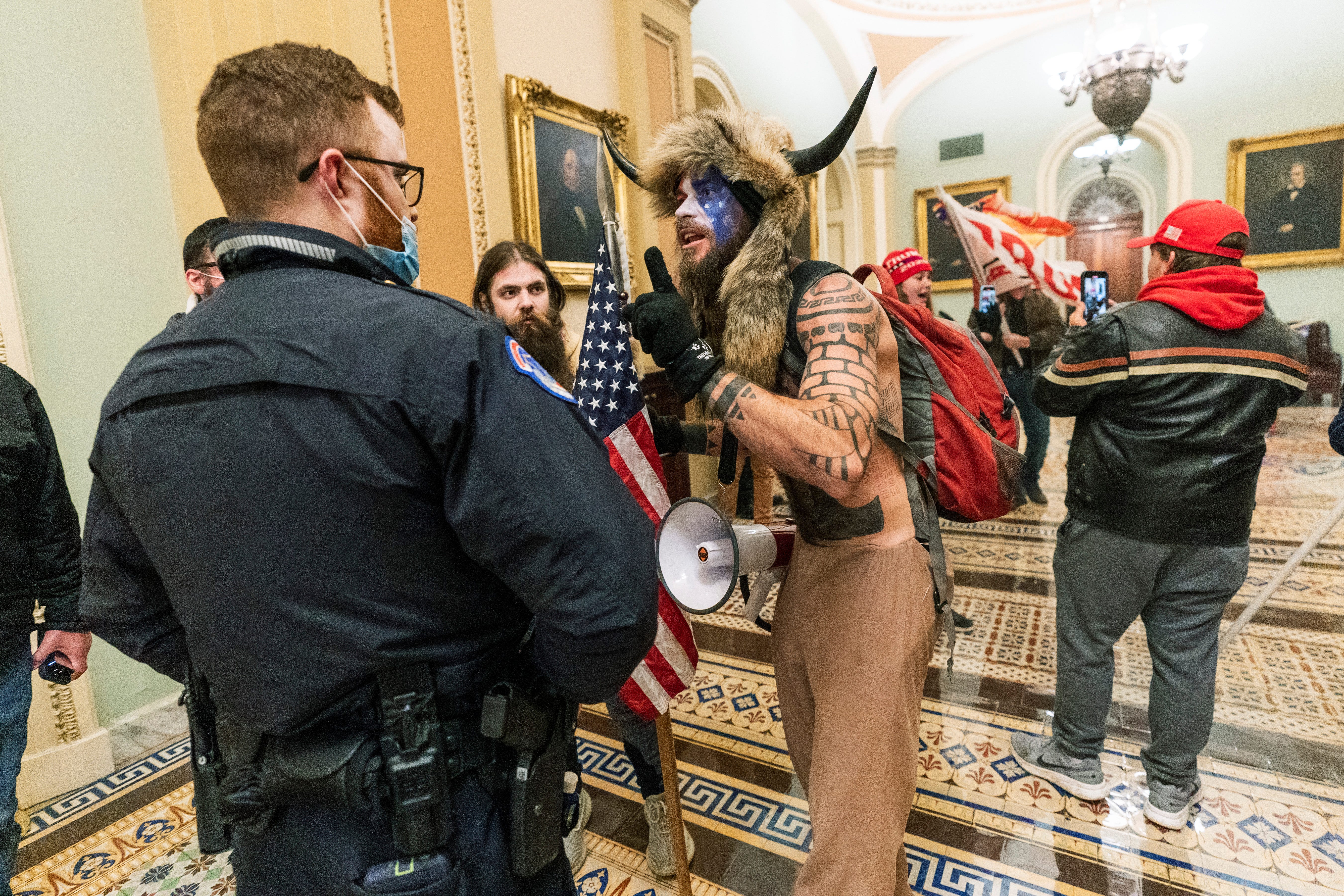
January 6 demonstrated how religious framing amplifies identity-based violence. Christian nationalist symbols dominated the Capitol attack. Rioters led prayers on the Senate floor after breaking in. The Public Religion Research Institute found that 38% of Christian nationalist adherents support violence to “save the country”—viewing political opposition through an apocalyptic lens where defeating enemies becomes a religious duty.
When you convince people that God wants them to oppose or subjugate entire demographic groups, framing that opposition as divine duty, you’ve begun removing moral guardrails that restrain violence—a pattern history has shown can escalate toward persecution and, in extreme cases, genocide.
The Four Phases of Escalation
Tracking this rhetoric across four administrations reveals systematic progression toward targeting immutable identities:
Bush Era (2004-2008): Traditional political combat focused on policy and ideology. Even heated Iraq War debates stayed largely within bounds of attacking beliefs and decisions, not identities.
Obama Era (2008-2016): The shift began. Stanford researchers found white respondents shown artificially darkened photos of Obama significantly more likely to support the Tea Party. Trump’s birther conspiracy didn’t attack Obama’s policies—it attacked his fundamental legitimacy as a Black American president.
Trump Presidency (2016-2020): Mainstreaming identity-based eliminationist rhetoric. Academic analysis found McCain had “no instances of racial appeals” in 2008, while Trump used them 36 times during 2016 alone. ABC News documented 54 criminal acts or threats from 2015-2020 explicitly invoking Trump’s rhetoric—almost all targeting people for their identities.
Biden Era (2020-2024): Institutionalization despite Trump’s defeat. Ron DeSantis signed six anti-LGBTQ+ bills in 2023 alone while characterizing gender-affirming medical care as “mutilating children’s genitals.” The rhetoric doesn’t target medical practices—it targets trans people’s fundamental existence.
Social Media: The Identity-Targeting Amplifier
Platform algorithms that prioritize engagement inherently amplify extreme content. But crucially, they’ve amplified rhetoric targeting immutable identities faster than ideological attacks.
The Buffalo shooter’s 180-page manifesto closely paralleled the Christchurch shooter’s document, demonstrating how online extremist content creates networks targeting racial and ethnic identities across continents. Meanwhile, the 2024 India Hate Lab report found that of 259 instances of dangerous speech including explicit calls for violence, only 3 videos were removed.
Meta’s January 2025 policy reversal explicitly allows users to call LGBTQ people “mentally ill,” compare women to “household objects,” and refer to ethnic groups as “filth.” Notice what’s permitted: attacks on gender identity, sexual identity, racial identity. The platforms have surrendered to rhetoric targeting who people are.
The Rhetoric Playbook: Targeting Identity
The strategies for normalizing eliminationist rhetoric follow predictable patterns:
Stochastic terrorism: Public figures encourage violence while avoiding direct incitement. Trump’s “fight like hell” before January 6, followed by attacks on the Capitol and threats against officials for certifying election results.
Dehumanizing metaphors: Trump’s systematic comparison of immigrants to “animals,” “infesting,” or “poisoning the blood.” “Eating the pets.” This language historically precedes genocide because it targets racial and ethnic identity, not political beliefs.
Coded identity attacks: “Globalist” as antisemitic dog whistle. “Traditional values” masking attacks on LGBTQ+ existence. The coding helps identity-based eliminationist rhetoric infiltrate mainstream discourse.
Religious justification: Moral cover for targeting immutable characteristics. Kirk’s biblical death penalties for gay men. Locke’s invocation of taking the kingdom “by force” against “God-hating” enemies.
The Institutional Response Gap
Despite mounting evidence linking identity-targeting rhetoric to violence, institutions have struggled to develop consistent frameworks for distinguishing between attacks on beliefs versus attacks on identity—partly because the boundaries aren’t always clear:
Congress: Treats eliminationist rhetoric targeting minorities similarly to harsh criticism of political positions, while failing to develop nuanced approaches to cases where professional identity becomes central to personal identity. First Amendment concerns paralyze responses even when rhetoric explicitly targets racial, sexual, or religious characteristics.
Law enforcement: Slow to recognize that identity-targeting rhetoric poses different threats than ideological conflicts, though the targeting of police as a profession complicates simple frameworks. The FBI designated domestic extremism as priority only after January 6.
Social media platforms: Have retreated from attempting to distinguish between attacks on chosen beliefs versus characteristics people can’t change. Meta’s 2025 policy reversal abandons these distinctions entirely.
Traditional media: “Both-sides” coverage treats eliminationist attacks on identity as equivalent to confrontational attacks on political roles, though the reality is messier than either side admits.
So What the Hell Can We Do About It?
I’m not going to pretend there’s some magic solution here. But the identity-versus-beliefs framework isn’t just for understanding the problem—it’s for cutting through the bullshit when you encounter it.
Stop falling for false equivalencies. When someone says “both sides are equally extreme,” ask yourself: Is one side targeting what people believe, or who they fundamentally are? “Immigrants are poisoning our blood” (targeting racial identity) isn’t the same as “Republicans are destroying democracy” (targeting political beliefs). One threatens the possibility of democracy itself. The other is just politics.
Call it out when you see it. When someone in your life crosses from criticizing beliefs to dehumanizing identities, you don’t need a script. Just: “Hold on—are you saying these people shouldn’t exist, or that you disagree with their politics?” Make them answer that question.
Pressure institutions to make the distinction. Media companies treat eliminationist rhetoric targeting minorities the same as harsh criticism of politicians. Social media platforms gave up even trying. Your representatives won’t condemn identity-based attacks from their own side. Make noise about it.
The goal isn’t civility. Democracy requires fierce conflict over beliefs and policies. The goal is preserving the basic compact that all citizens have a right to exist and participate regardless of who they are.
Recognize when YOUR side crosses the line. This is the hardest one, because it requires acknowledging that apocalyptic framing can create permission structures for violence even when it targets beliefs rather than identities. If you genuinely believe your political opponents are fascists destroying democracy—not just wrong, but existentially dangerous—how do you maintain that conviction without creating the same kind of threat framework that leads unstable people toward violence? There’s no easy answer here. But the framework still helps: Are you saying these people’s beliefs are dangerous and must be defeated politically? Or are you saying these people themselves are irredeemable enemies who must be eliminated? The first is democratic conflict. The second is eliminationist thinking, even if it targets ideology. When you catch yourself or your allies sliding from “their policies threaten democracy” to “they are a cancer that must be cut out,” pump the brakes. The rhetoric matters, even when you’re convinced you’re fighting genuine threats.
Democracy can survive people hating each other’s politics. It cannot survive systematic campaigns to eliminate groups of people for existing.
Where We Stand
Twenty years of escalating rhetoric have increasingly normalized language targeting people’s fundamental existence—their race, sexuality, gender identity, religion. While the boundaries between identity and beliefs can be complex, this represents a qualitatively different threat than traditional political combat over policies and roles.
The patterns in contemporary rhetoric—with systematic dehumanization of minorities for characteristics they can’t change significantly outpacing confrontational attacks on chosen positions—challenge both-sides narratives that obscure genuine threats. While all political violence concerns us, eliminationist rhetoric targeting identity poses distinctive dangers to democratic pluralism that require specific responses.
Here’s the uncomfortable truth: We’re not debating mean tweets or hurt feelings. Calling someone a racist for opposing affirmative action is harsh. Calling my gay son an abomination is dehumanizing.
And frankly, hate crimes against “racists” and “fascists” haven’t doubled in recent years. Hate crimes against people like my son have.
So no, they’re not remotely the same thing.
But what’s maybe even more alarming is we’re watching systematic rhetoric that uses the same dehumanizing language that historically precedes ethnic cleansing and other atrocities, amplified by social media and legitimized by political leaders.
The patterns are concerning: dehumanizing language targeting immutable characteristics, religious justifications for violence, systematic campaigns to portray minorities as existential threats. While contemporary American rhetoric hasn’t reached the explicit, systematic calls for extermination typical of genocidal campaigns, the permission structures and moral frameworks are being constructed.
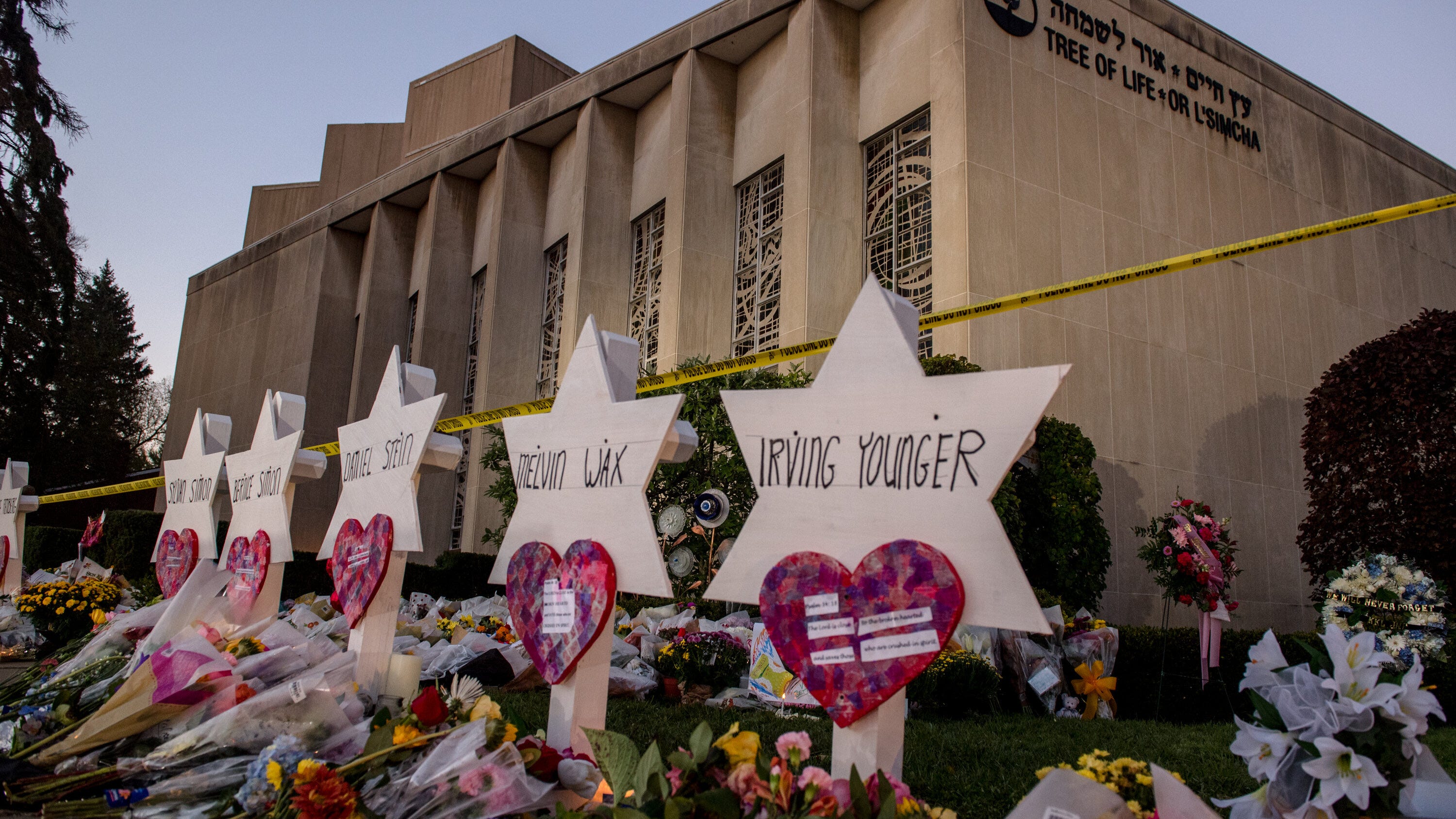
You can change your mind about politics. You can leave your job. You can modify your behavior.
You can’t change your race, sexuality, or ethnicity. When rhetoric targets these characteristics for elimination, it crosses a line that democracies cannot tolerate.
The question isn’t whether harsh political rhetoric threatens democratic norms—all democracies have heated political debates. The question is whether we can distinguish between attacks on what people believe versus who they are, and respond accordingly before this rhetoric normalizes violence against identity groups.
Because when words systematically target identity for elimination, they create the ideological foundations for genocide.
Even if we’re not there… yet.
The distinction between targeting beliefs and targeting identities isn’t academic philosophy. It’s the difference between democratic conflict and the ideological groundwork for systematic persecution. Understanding this difference—and acting on it—may determine which direction America heads.
Discover more from The Annex
Subscribe to get the latest posts sent to your email.

 The Annex
9 thoughts on “Sticks and Stones: When Words Kill”