Claude read my manuscripts and concluded my greatest literary influence was Dorothy Dunnett—the banter-as-intimacy, the intelligence-as-action, the protagonists who mask damage through performance, the period voice maintained without apology. The analysis was sophisticated and technically accurate about what my prose does. It traced these techniques to their most famous literary practitioner and declared the case closed.
Except… I’ve never read Dorothy Dunnett.
I didn’t even know who she was.
The observations were spot on, but the genealogy was completely wrong. And that fascinates me, because it reveals something true about how craft actually develops versus how we assume it develops. We expect writers to emerge from writers, influence flowing downstream through reading—you love Ursula K. Le Guin, so you write like Ursula K. Le Guin, and readers detect the family resemblance. The anxiety of influence model assumes a relatively clean transmission: read, absorb, imitate, eventually find your own voice within the tradition you inherited, right? That’s how this works.
I spent two years studying British Modernists before dropping out of college. Woolf, Joyce, Ford Madox Ford—writers who understood that the old Victorian architectures couldn’t hold the weight of a fractured century, that form follows trauma, that fragmentation on the page can render what linear narrative cannot, that what’s left unsaid often matters more than what’s spoken. The formal education gave me vocabulary for discussing technique and a framework for understanding why certain choices work and others don’t, even if I never finished the degree and have forgotten most of the academic language. Partly I left because English postgraduates are dirt poor and web developers at the time were rock stars making money hand over fist. Partly I was tired of writing essays exploring J. Alfred Prufrock’s existential crisis about rolling his trousers and eating peaches, or how the blue curtains represent the protagonist’s deep depression and isolation from society.
(I did write a lengthy essay on how Star Wars is literature in the Romanic tradition that earned me an A+ though, so there’s that.)
Anyway, while the professors had me parsing Eliot, I was pursuing my own education on the side.
I fucking love Hemingway. Not because he’s fashionable—he’s not, anymore—but because he’s real. He followed truth. The iceberg theory isn’t a technique you can learn from a craft book and bolt onto your prose; it’s a commitment to honesty about how humans actually experience emotion. We don’t narrate our feelings to ourselves in articulate interior monologue. We turn away. We sigh. We squeeze someone’s hand and hope they understand what we can’t say. Physical action carries emotional weight because that’s how it actually works—the restraint amplifies rather than diminishes, the reader supplies the visceral reaction precisely because you don’t demand it. Melodrama is a kind of lying, and Hemingway refused to lie.
I also refuse to look away from the truth. I just happen to write about bioengineered super-assassins instead of fishermen.
In my work, “he’ll sire no more children” follows a scene of extreme violence, and then “he was resisting” closes the door on it. No horror from the narrator. No dwelling. The understatement does the work that melodrama only pretends to do. “Pretty awful” describes exploded intestines. The protagonist notes with detached annoyance rather than shock that vomit from a torture victim splashed on him. The clinical treatment isn’t coldness—it’s trust. Trust that the reader is smart enough to feel what’s real without being instructed.
The most demanding test of that trust comes in Death or Glory, when one of my protagonists is forced to watch another character’s gang rape over three days. Sexual violence happens in war. For it not to happen in a story about war would be a lie. But what do I actually put on the page? A man walking toward her as he undoes his belt.
Followed by this:
“I have no words for what happened that morning.
When it was over… after St. James and Wright and Bond each… after the eagle warriors all stepped forward… after they had abused her with more than just their bodies… I was drowning in my own vomit.”
Three incomplete clauses. One verb that never arrives. The sentence can’t finish itself, and the reader fills in what the narrator can’t say. That’s the iceberg applied to content Hemingway never dared approach—not omission as authorial control, but omission as character collapse. The narrator breaks, and the prose breaks with him. The camera stays on the witness, not the victim. The gaze is refused. The violence does work—it establishes what he’ll burn the world to avenge, why “we’d shoot her first” becomes a mercy, why he can’t touch his wife afterward—but it exists in white space and aftermath, not spectacle.
Hemingway wrote constrained stories about bullfighters and fishermen with that restraint. I write about genocide and god-emperors and galaxy-spanning stakes with the same commitment. The method transfers because the principle is the same: truth about fishermen, truth about super-assassins, truth about what war does to people who survive it. The gap between clinical prose and apocalyptic content creates tension that isn’t Hemingway, isn’t space opera—it’s whatever I’m building.
Minimalist execution, maximalist scope.
He taught me how to render difficult things honestly. But he wrote about the contained tragedies of individual men. The permission to apply that restraint to larger questions, to refuse easy resolution at the scale of war and revolution and political violence—that came from somewhere else entirely.
A children’s author, in point of fact.
“Fantasy is hardly an escape from reality,” Lloyd Alexander once wrote. “It’s a way of understanding it.”
I’ve been reading Alexander since my early teens, when my aunt introduced me to him through a children’s literature course she was taking. That introduction quickly became obsession. I’ve read everything he ever wrote—not just The Chronicles of Prydain that made him famous, but the adult books from his early career (Janine is French is fantastic), the critically acclaimed yet shamefully forgotten Westmark Trilogy, The Marvelous Misadventures of Sebastian (my personal favorite), The King’s Fountain (breathtakingly profound), his final novel The Golden Dream of Carlo Chuchio (the gem in his literary crown), and even the obscure and exquisitely beautiful and disturbing story Max Mondrosch (one of his best). I own physical copies of literally everything he published, many as signed first printings I’ve tracked down over years of hunting. A friend of mine curates the Lloyd Alexander collection at the BYU library. I’ve been to the exhibit and was reduced to tears reading his letters to his wife.
It’s my Mecca.
The Chronicles of Prydain are great, but they’re arguably not his best work. What shaped my craft most profoundly is the Westmark Trilogy—his most sophisticated and morally complex achievement (the first book won the 1982 National Book Award), and almost completely overshadowed by Prydain despite being the far better work. Westmark is my literary touchstone. I return to it the way some writers return to Shakespeare or Austen.
What Alexander gave me through all of his work, but Westmark in particular, was permission to refuse false comfort. The trilogy doesn’t flinch from war’s cost or revolution’s moral complexity. It raises questions it never answers—when is political violence justified? can you sacrifice innocents for a greater cause? what happens after you overthrow the tyrant and discover that governance is harder than revolution?—and trusts readers to wrestle with complexity rather than providing easy resolution. In a 1989 interview, Alexander said the content was “very meaningful and very painful” to write about, drawn from his own World War II combat experience. “I did not find answers to questions raised,” he wrote, “and I expect I never will.” Then this, which I’ve returned to again and again: “This wasn’t an attempt to exorcise my demons. No, I keep and cherish those demons. I like to believe they’re my conscience.”
I keep and cherish those demons.
That line unlocked something for me. I don’t write about moral complexity despite finding it disturbing—I write about it because I find it disturbing. The discomfort matters. And the refusal to resolve matters even more. Alexander showed me that you can write adventure fiction that treats serious philosophical questions with uncompromising honesty, that you can trust young readers with genuine tragedy, that the questions matter more than the answers. When my characters wrestle with means-and-ends justifications, when they carry the weight of decisions that saved some lives by taking others, when they discover that the cost of doing what’s necessary doesn’t get refunded just because the cause was just—I’m working in territory Alexander mapped forty years ago.
His influence is so deep I sometimes don’t recognize it until I’m revising and realize I’ve written another scene about the gap between revolutionary idealism and brutal necessity. I wrote all of Born in Battle before I consciously understood that The Kestrel was baked into every page.
But the rest of my toolkit didn’t come from prose fiction at all.
I grew up in Vancouver during the film industry boom of the 1990s, when the city was doubling for every American location that wanted Canadian tax credits and mild weather. I trained as an actor through my teens—formal classes, theater programs, professional instruction, actual productions. The training taught me that dialogue is action, that every line has an objective, that subtext matters more than text, that characters reveal themselves through what they do and say rather than through authorial explanation of their inner states.
When I write a scene, I don’t construct the character from outside like an architect drafting blueprints. I inhabit them. I become the POV until I’m thinking as they think, reacting as they’d react, feeling the wrongness of a line that doesn’t fit in the mouth even when I can’t articulate why. This is why my morally complex characters don’t read as authorial judgment—you can’t editorialize about someone you’re being. When I write, say, Epasotl, the chaneque witch in the Doomsday Recon trilogy, I’m not thinking “here’s the blue cat-gremlin observing humans with detachment and confusion.” I’m experiencing humans as genuinely confusing, their language as genuinely ugly and stupid, their weird obsessions genuinely baffling. That’s her reality from inside, not a perspective I’m describing from outside.
Concurrent with the acting, I studied dramatic forms for years—screenplays and stage plays both, from my teens into adulthood, reading them, annotating them, reverse-engineering how scenes worked. I often prefer reading plays to prose, if I’m honest. There’s something about the way dramatic writing has to carry everything through dialogue and action, without the novelist’s ability to slip inside a character’s head and explain what they’re feeling, that appeals to my instincts more than traditional fiction does.
Screenwriting teaches you that if it’s not behavior, it doesn’t exist. You can’t write “he’s brilliant” in a screenplay—you have to show him doing something brilliant, in action, in real time, because the page is going to become footage and footage can only capture what characters do and say. Stage plays teach a related but distinct lesson: dialogue has to carry even more weight because you can’t cut away. The camera can show a reaction shot, a meaningful glance, a detail of setting that communicates mood. On stage, the words do almost everything. The discipline of writing for actors who have to make language live in real time, in front of an audience that can’t rewind—that shapes how I craft every line of dialogue I write whether I’m conscious of it or not.
Intelligence-as-action isn’t a stylistic choice I made after careful deliberation; it’s the only way the craft works when you learn it through a dramatic lens. A screenplay page equals roughly a minute of screen time. Every line has to do work. There’s no room for fat, no space for the narrator to step in and explain what behavior already showed.
And then there was the IHOP practice, which sounds ridiculous when I describe it but might be the most valuable training I ever gave myself. Through my early twenties, concurrent with and after college, I spent countless nights at diners at 2am transcribing conversations. Not theater people or academics or the kind of people who show up in literary fiction. Shift workers winding down, drunks processing their evenings, insomniacs staring at coffee, cops between calls. People at the margins, talking the way people actually talk.
Real speech is messy in ways that literary dialogue rarely captures. People talk past each other, interrupt, change subjects without transition, circle back to things they said ten minutes ago, leave sentences unfinished when the other person already understands. Literary dialogue has a tendency toward completeness, toward the well-formed thought articulately expressed. Human conversation doesn’t work that way, and learning the difference taught me how to write characters who sound like themselves rather than like mouthpieces for a writer who’s read a lot of books. That’s why my characters sound different from each other based on class and background—I’m not imitating literary representations of speech. I’m working from primary sources.
The diner transcription was part of something larger: I’ve always been someone who listens to and internalizes other people’s stories and lived experiences. I’ve read memoirs extensively, especially war memoirs, as part of my research into the psychological territory my characters inhabit. Alexander wrote from his own combat experience in WWII. I write from deep study of others’ service—the accounts of veterans I’ve known, the testimonies I’ve read and reread until I carried their scars. You can’t write war honestly if your only sources are other fiction. You have to go to the people who were there.
Same for writing female characters. I’ve been told many, many times I write women exceptionally well. How did I learn this black art? Probably by actually listening to them.
(More male authors should try it, as crazy as it sounds.)
Anyway, apparently I’ve reverse-engineered techniques that writers usually absorb through reading by assembling them from adjacent disciplines and the results apparently look like Dorothy Dunnett to a pattern-matching AI. Somehow the convergent evolution produced similar features: banter as trust, intelligence as action, performed competence masking interior damage, period voice that never winks at the modern reader. Craft, it turns out, is transferable across forms in ways the standard models don’t capture. An actor’s understanding of objective and subtext, a playwright’s economy, a 2am diner’s ear for authentic speech, a veteran’s memoir internalized until you don’t just feel the weight of what they carried but you carry it too—these are load-bearing skills that don’t require an MFA or a literary pedigree or having read the right canonical authors in the right order.
Writing programs and craft books assume you learn to write prose by reading prose. There’s truth to that—I’m not dismissing the value of wide reading or the way certain authors become part of your internal furniture. Alexander gave me the load-bearing wall in my aesthetic. Hemingway gave me simplicity and the courage not to look away. Even T.S. Eliot gave me restless nights in one-night cheap hotels, and that’s not for nothing.
But it’s not the whole truth, and it may not be the most important truth for writers trying to find their own path.
Influence isn’t always downstream flow from writer to writer where you wrestle with your predecessors until you find your own voice within their tradition. Sometimes it’s lateral, assembled from adjacent disciplines, techniques transferred across forms by ignoramuses like me who didn’t know they were supposed to learn it from books. Maybe the writers who shaped you most aren’t always the ones whose names you’d put on an influence list—maybe they’re the ones whose questions you keep trying to answer, whose demons you’ve inherited and learned to cherish, whose permission made your own work possible.
I’ve never read Dorothy Dunnett. But apparently I write like her anyway.
Might be time to fix that. Where should I start?
Discover more from The Annex
Subscribe to get the latest posts sent to your email.

 The Annex
Hemingway? I’ve read a lot of your work. Hemingway does not come to mind as I reflect on your work. Alexander, yes. Even Joyce at times, but not Hemingway.
Actually, generally no other authors come to mind as I read your work because it’s so hard for me to disconnect from the story and the characters, even on rereads specifically trying to do analysis. Unlike for some authors, I’m not reading and thinking, here’s Heinlein’s influence, there’s Tolkien’s influence, and that’s Douglas Adams’s voice. While you blend genres, you’re not borrowing from other authors as I’ve seen other authors do. The explanation of watching and listening to other humans to blend into realistic humans rings true. The settings are there and adequately described so I’m in the moment, but it’s humans interacting with the world at the center, not a textbook of how the world functions. You didn’t mention in this essay showing only a small fraction of the world directly, yet that’s also something in your writing that continues across everything.
Even when the narration is third person, I’m still inhabiting the people, feeling what they feel physically and emotionally. I’m not watching a movie; I’m in the scene feeling everything. That may be why I often am more taken with a secondary character in your books–I’m feeling the love/hate/something for another character in the scene; I’m not just watching the main character do their actions (although there are plenty of actions even in the slower parts even when the only thing on the page is the dialogue implying the action). The experience is more like being front row at a small live theatre than watching on the big screen where I am sometimes taken out of the moment by a realization of “that’s great cinematography that cost a fortune and yet those are 1D character sheets in front of the action scene”.
I don’t go to a lot of live theatre any more so more recently reading your books is like sitting with a friend and watching their pain and, yes, awkwardly patting their hand or shoulder because there’s nothing else to do. I can’t take away their pain. I can’t fix anything. All I can do is bear witness and say, I do see you, real human, you; you are not alone in this situation that sucks big donkey balls.
LikeLiked by 1 person
Hemingway might just be the tip of the iceberg showing. I can’t imagine him not being an influence given how widely I’ve read him over the years—he shaped my process, my commitment to restraint, my refusal to lie on the page. But maybe the result has been alchemized into something that doesn’t read as Hemingway-shaped anymore. Which is kind of what the essay argues about Dunnett in reverse.
Ironically I often lamented my frustrations struggling with craft and threatened to quit writing forever be because I’ll never be Hemingway, so what’s the point?
Your seeing Joyce and the British Modernists in my work doesn’t surprise me. I loved them, just didn’t love writing essays about Gabriel’s epiphany while watching the snow fall or the significance of rolling one’s trousers.
I’ll let you in on a little secret about the worldbuilding: I make up at lot of it on the fly as needed. Only after the manuscript is well underway—or sometimes even done—do I go back and look at what I’ve shown on page and build it out in depth to make sure it’s coherent. The iceberg effect without building the iceberg first.
Except for Stygian Blades. That world building necessitated deep exploration before I could start writing.
I prefer theater to movies, even if I don’t get out to see plays much these days. But yeah—all my characters, even the minor ones, even Tess the tavern girl who appears in Act One Scene Two for five lines and is never seen again, are inhabited rather than constructed.
I pour a lot of emotion into the page, so it’s always good to hear when it resonates. But I already know you hate me and make you happy-sad. I’ve ugly cried writing scenes and I’m not ashamed to admit it. I was numb for days after writing Dance’s assault.
LikeLiked by 1 person
Hemingway shaping “my refusal to lie on the page” makes sense to me as does the possibly apocryphal “bleeding on the page”.
Your style and word choice aren’t like Hemingway. The bleeding on the page to show human truth does come through in all your fiction.
LikeLiked by 1 person
Yeah, I definitely don’t write in his style, but his approach to writing definitely shaped me.
LikeLiked by 1 person
Hello Ryan, my first attempt to send this was blocked – I suspect due to my using a VPN. We swapped messages last night on Bluesky.
Your article is fascinating in the way you describe the evolution of your style – something that many writers find hard to do. I should first of all say that I’m not familiar with your work, and some of the subject matter you mention I may recoil from, but I do know Dunnett’s work very well. I worked her when I was a bookseller turned web designer and we became friends and I was on the board of what is now the Dorothy Dunnett Society for many years. My website in her memory http://www.dorothydunnett.co.uk grew out of that first bookshop website I built her pages within.
She was originally a professional portrait painter – something that is clearly seen in her detailed and evocative descriptions, and was married to Alastair Dunnett who was editor of The Scotsman newspaper and himself an author and playwright. When she exhausted her favourite reading material – historical fiction – he suggested she write some herself, and two years later she asked him to read the manuscript of Game of Kings, which would set the bar for the genre. Oddly it was published first in the US – the UK publishers didn’t know what to do with it because it was much longer than what they were used to. Lois Cole, who had edited Gone With the Wind, saw it and snapped it up.
She writes mostly in what if often called third person omniscient, which is not a commonly used perspective but which suits her subject matter perfectly. It means that in the 6 volume Lymond Chronicles you are almost never in the head of the main character, so you build up your view of him through the perspectives of everyone else, as the point of view changes from scene to scene with the characters taking part. This allows her to employ deception, and delay revealing his true character – which initially appears that of an outlaw and rogue. It also allows her to build up the secondary characters in a way that makes the reader very invested in them too, as well as creating a world that is very immersive. You don’t so much read her books as step into the world – initially of 16th century Scotland – that she creates. And her incredibly detailed research – far beyond anything most authors attempt – means that it is historically very accurate. She inserts her fictional characters into the world of the historical characters and the landscape they inhabited. Readers often visit those places and find her descriptions perfectly match with what they looked like at the time.
The story later moves across Europe – France, Malta, North Africa, Constantinople in the time of Suiliman the Magnificent, Russia in the time of Ivan the Terrible, and England in the time of Mary Tudor. All were visited and researched extensively – she gained access to the Seraglio in Istanbul long before it was opened to public view. And her readers have followed the trails and become knowledgable in the politics of the time and the social environments of the locations at that time. Her writing is challenging, and has many subtle sub-currents that can add to understanding of the story and characters if you’re prepared to tackle poetry in foreign languages that the hero likes to regale us with. But the overall effort is so worthwhile for the engaged intelligent reader that she always assumed she was reaching.
Her action scenes are used sparingly, your mention of “intelligence-as-action” struck a chord there, but when she does they are magnificent. Game of Kings contains the very best swordfight in literature, which somehow manages to describe the detail – analysed and confirmed by fencing experts who have reconstructed it – without for a moment losing the drama and tension of what is taking place.
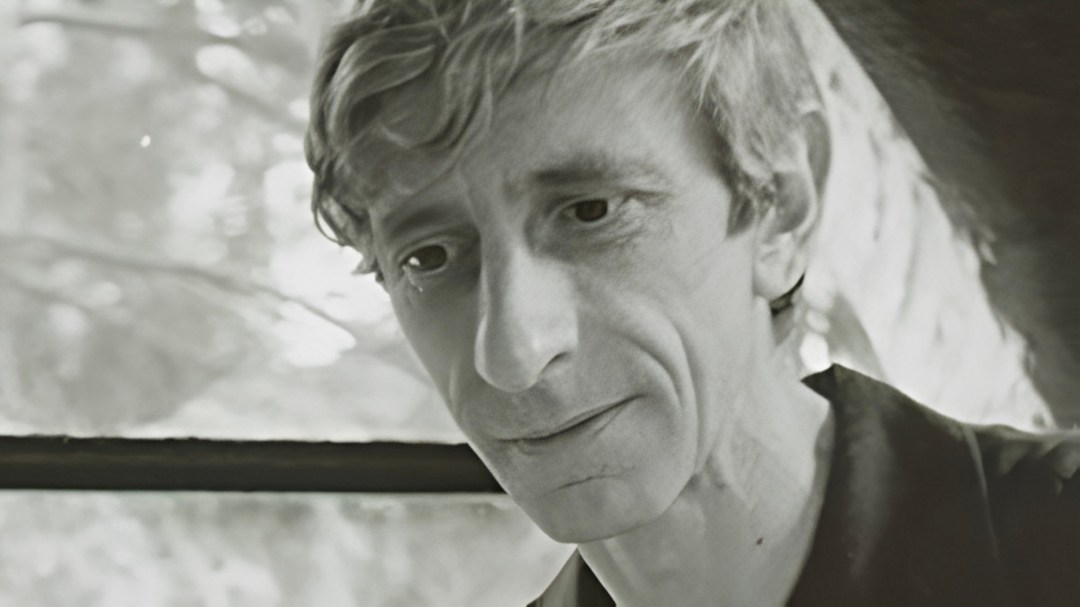
I am on less solid ground in following your mentioned authors – I last read Joyce at school, and I’ve largely forgotten what I read of Le Guin. By coincidence I live now in Slovenia, about 6km above Kobarid – known to Hemingway readers by its Italian name of Caporetto where he wrote A Farewell to Arms. There is a wonderful photo-portrait of him in the excellent museum there which is largely devoted to the battles in the area in the First World War. It must be about 20 years since I last read him and I really should revisit his work. Your mention of him being “real” is what propels that feeling because Dorothy’s characters also feel very real. We come to know them very deeply – I’ve often said far better than we know our own families – but we also get to see their misunderstandings of each other, and where they arise from, and how they fail to deal with them.
Your mentions of both acting and screenwriting are intriguing. While never an actor, Dorothy was a big fan of opera and in fact had what she jokingly referred to as half a music degree – she aced the theoretical but twice failed the practical singing due to sore throats. And of course opera and acting are closely related. Her son Ninian is a screenwriter, so the skills seem to run in the family.
And lastly – because I’m going on too long as usual – your description of transcribing conversations is most interesting. While I don’t think she did exactly that, whenever she met anyone – and often if they were readers they were desperate to ask her questions – within a couple of minutes she had them talking about themselves. She was always interested in other people and what they thought and did, and I’m sure she mentally filed those conversations away for later consideration.
So although your subject matter and probably style are very different, I’m sure that as a author who clearly thinks deeply about your craft, you would find reading Dunnett a very interesting experience. One author refers to the Lymond Chronicles as her 6 volume masterclas in writing. Start with Game of Kings, and do let me know your reactions, and perhaps you could suggest which of your own books I might read to get a flavour of your writing.
regards
LikeLiked by 2 people
Thank you for this! Your depth of experience with Dunnett and her work is fascinating and not at all what I expected the essay to surface. What a wonderful surprise to have you come along.
The third person omniscient insight is technically fascinating. Building the protagonist through everyone else’s perspective rather than his own interiority is a specific structural choice with specific effects, and I can see how it enables everything you describe about delayed revelation and reader investment in secondary characters. I work mostly in first person or third limited, so it’s not a technique I’ve used, but understanding why it works for what she’s doing is valuable. I might have to try it in a future project.
On the content question: I may be less of a challenge than you’re bracing for. I deal with war unflinchingly but obliquely—it’s about the aftermath, not the traumatic event itself. That excerpt in the essay is literally as graphic as I get. Three incomplete clauses and a camera that refuses to look. You might find more kinship there than distance.
For entry point: the Doomsday Recon trilogy is what’s currently published. Book 1 (Doomsday Recon) gives context but was edited for genre conformity. Book 3 (Born in Battle) is the mature voice. You could theoretically start there, but you’d be missing some context.
(Also: bookseller turned web designer—I’ve got 25 years in software myself, most of it web development. Small world.)
Looking forward to continuing this on Bluesky.
LikeLiked by 1 person